Katherine Riegel
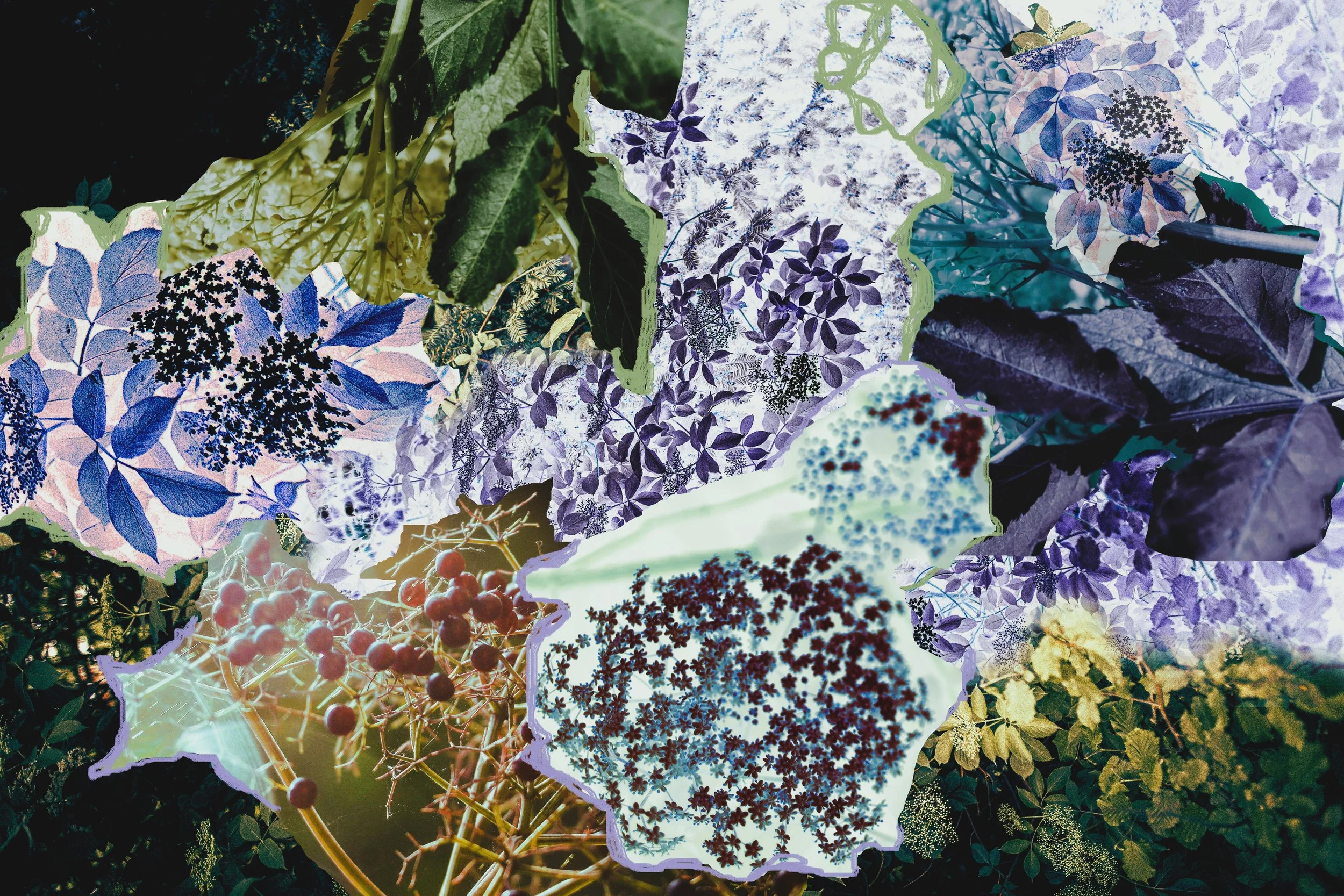
Elder (Sambucus nigra)
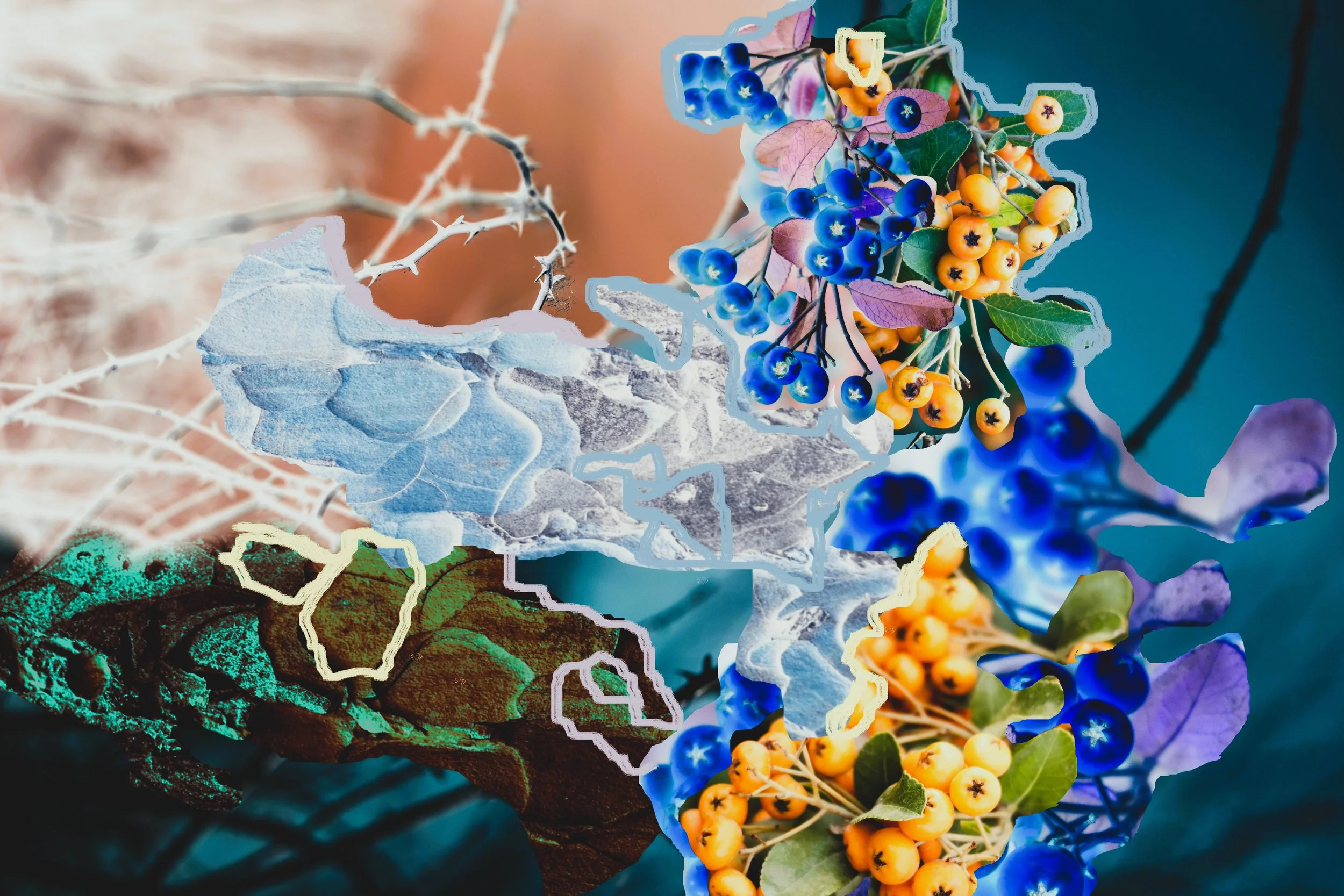
Hawthorn (Crataegus monogyna)
Artist Statement: Talking & Listening to Plants
Rooted in the Midwest, born and raised in central Illinois, I have always been a Midwesterner, even when I moved away after college. My first ten years were spent on a small horse farm in an area where my parents found a few tiny hills surrounded by flat corn and soybean fields. We had a shallow slope between the house and the lower pasture that we called the Wild Area, planted with hawthorns that smelled heavenly when they bloomed in spring. The Wild Area also had thick, messy undergrowth that made it a great place to get away as a child; I followed small paths made by wildlife, crawling on my hands and knees. An avid reader of fairy tales and fantasy, I always wished to stumble through a portal into another world.
Fast forward fifty years and I find myself in Scotland, a mile from the English border, able to move here in summer 2025 with my dual-citizen husband. The day after arrival, I wandered the small backyard (garden, for my UK friends) that had been a selling point of the house, identifying what I could with a phone app. Who knew holly came with variegated leaves? Or the different kinds of wildflowers with names I’d only seen in books—campion, willowherb, toadflax, knapweed! But alas, no trees. The 200-year-old house had been redone fifteen years before as a holiday let, and trees could have ruined the view.
Walks with our two golden retrievers, however, took me past trees I also learned to name, and an interest in the natural world meant the social media algorithm offered up the oldest tree in Britain (the Fortingall Yew, 2000-5000 years old) as well as the fact that many yews in Britain are found next to old church cemeteries but in fact pre-date the churches. And why? Folklore and myth, those stories from times when plant knowledge was central to human existence. So I embarked on a project of learning the folklore of native trees and endeavoring to write poems about them, to recapture some of that sense of belonging, connectedness, and possibility I had as a child.
This spring, after walking past hawthorns with buds that I knew would open to provide scent-memory for me, sustenance for pollinators, and berries for birds, I decided to crowd our backyard with a hawthorn myself. It’s currently about 15 inches tall and protected from dog trampling by a sturdy conical trellis designed for vines. Maybe one day it will become a door to somewhere. For now, we’re both sending our roots into the rocky soil, hoping this new place will sustain us, hoping to keep growing.

What Life Is Like Here on Earth, out from Sheila-Na-Gig in May 2026, is Katherine Riegel’s fourth full-length collection of poetry. She also has a lyric memoir about grief, Our Bodies Are Mostly Water (Cornerstone Press, 2025) and a chapbook of prose poems, Letters to Colin Firth (Sundress, 2015). Her poems appear in Poets Reading the News, Rattle, SWWIM, and elsewhere. Co-founder and managing editor of Sweet Lit, she runs online classes for writers of poetry and short creative nonfiction. Find her at katherineriegel.com and in southern Scotland, where she moved in 2025.