Susan Richardson
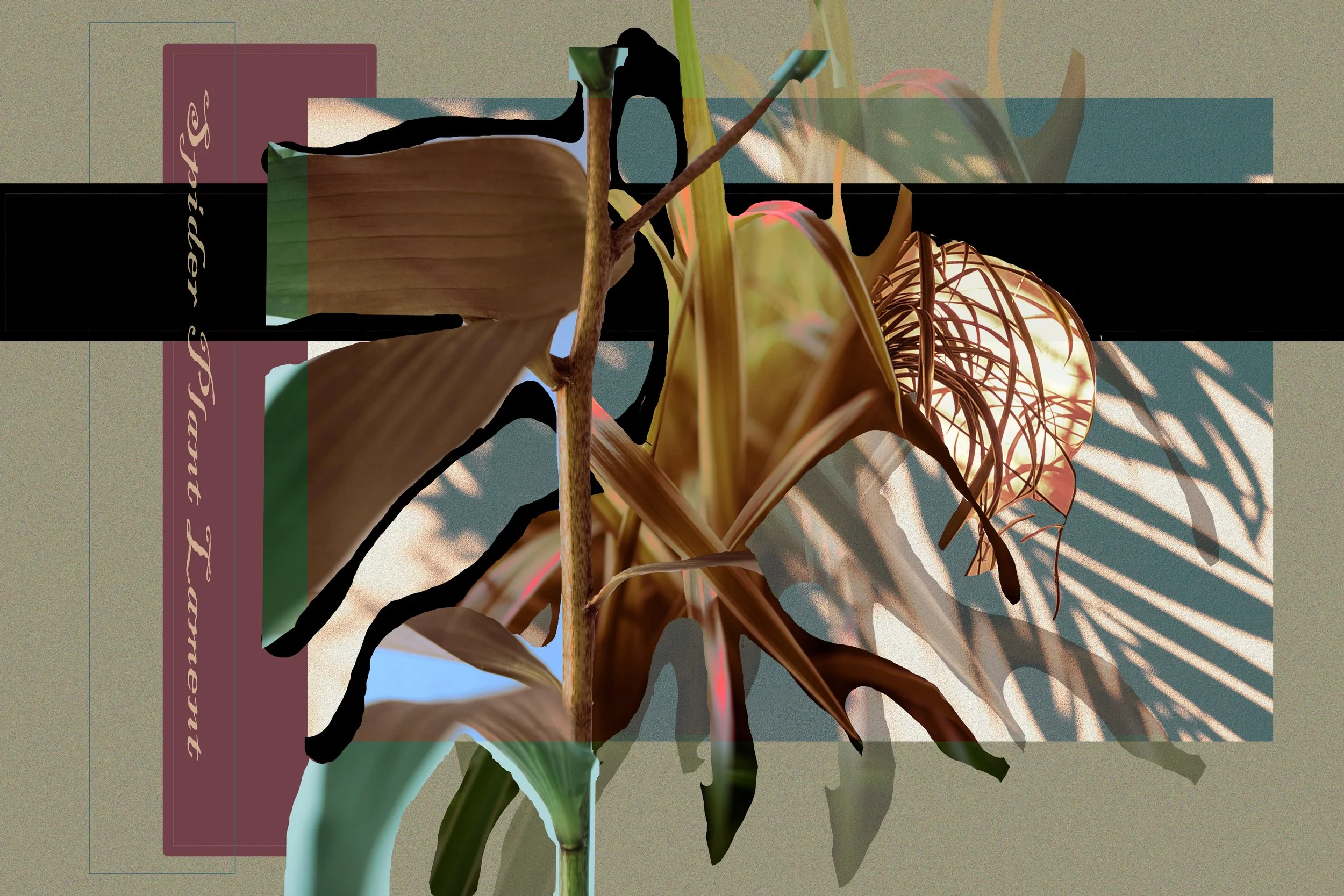
Spider Plant Lament
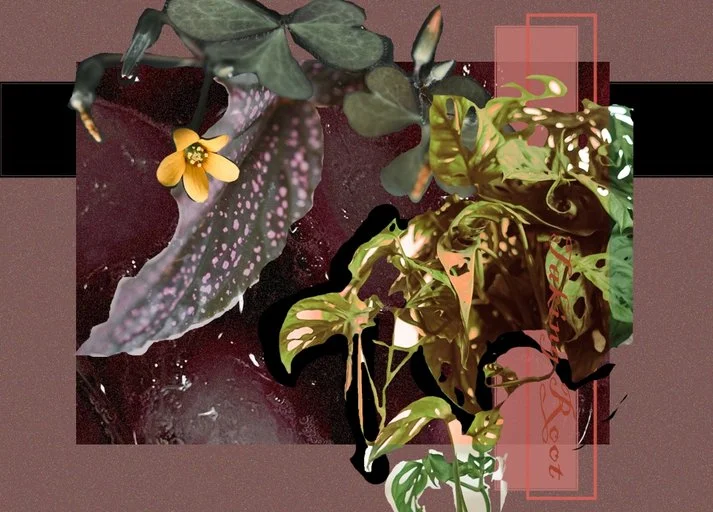
Taking Root
Artist Statement: Talking & Listening to Plants
Succulents sun themselves on my kitchen windowsill. A diversity of ferns, from the delicate wisps of the maidenhair to the scaly spears of the crocodile, soak up steam in the bathroom. A Hoya linearis strands down the length of my study’s shelves and I part it like a bead curtain whenever I need to seek out a book. On my bedside table, peace lilies pump out oxygen all night, an extraordinary trait that’s said to make sleep more easeful.
Having had a lifelong enthusiasm for houseplants, I’m currently working on a collection which explores, through the medium of both poetry and creative nonfiction, our complex relationship with these vegetal beings with whom we share our homes. It considers the limits and possibilities of the idea of ‘the wild’ and the extent to which a meaningful connection with the natural world can be forged with a commercially produced plant confined to a five-inch pot. What aspects of their wild ancestry do houseplants retain? Do they still have a connection with the ecosystem from which they originated – the tropical rainforest or semi-desert, their pollinators and predators? And what part do houseplants play in the overall ecology of our indoor living spaces?
My attention has also vined and twined through the issue of ethics and the many ways in which houseplants are manipulated for our gratification. In the light of recent groundbreaking discoveries in the areas of plant intelligence and sentience, should we be mass producing them in tissue culture labs via the micropropagation process? Should we be spraying them with a chemical growth regulator, and exposing them to gamma radiation to create new cultivars? Should variegated plants with ever whiter leaves be bred that aesthetically please yet struggle to photosynthesise?
The most pressing question with which I’m grappling, however, at least as far as the writing of the poetry is concerned, is the degree to which it’s possible to write from the perspective of a houseplant, to learn to speak pothos, snake plant and staghorn fern. I’ve been interested in the practice of voicing the more-than-human for quite a number of years, writing as porbeagle shark, European sturgeon and a range of other creatures in my two most recent poetry collections. Moving beyond the animal kingdom and attempting to create a houseplant-specific parlance has so far been a challenging but exhilarating process.
Susan Richardson is a writer, performer and educator from Wales. Her fourth poetry collection, Words the Turtle Taught Me, emerged from her residency with the Marine Conservation Society and was shortlisted for the Ted Hughes Award. Her work of creative nonfiction, Where the Seals Sing, a deep dive into the lives of Atlantic grey seals, is published by HarperCollins. She has been writer-in-residence with the British Animal Studies Network, facilitated by the University of Strathclyde, and also enjoyed a four-year stint as one of the resident poets on BBC Radio 4’s Saturday Live. www.susanrichardsonwriter.co.uk