Anna Lena Phillips Bell
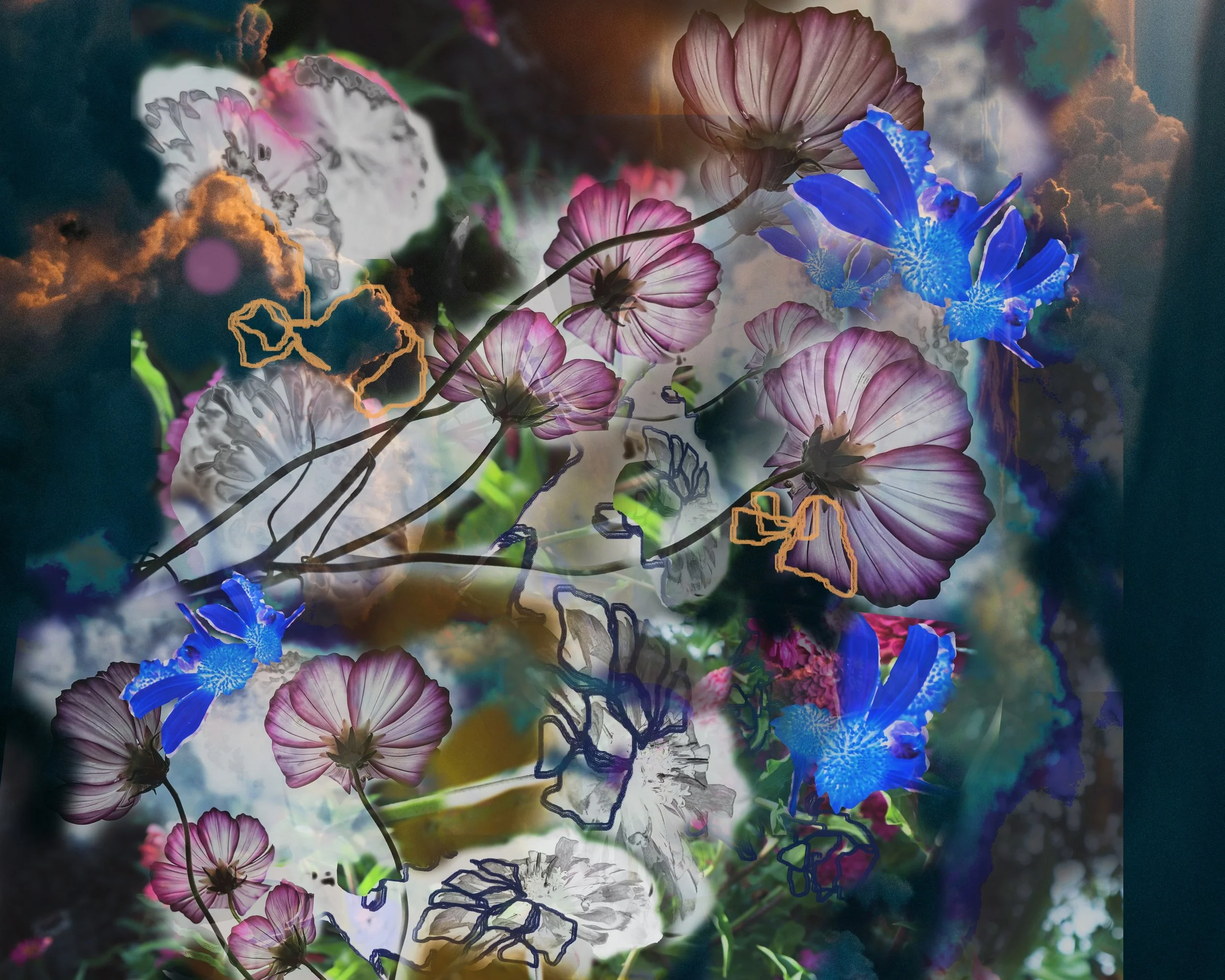
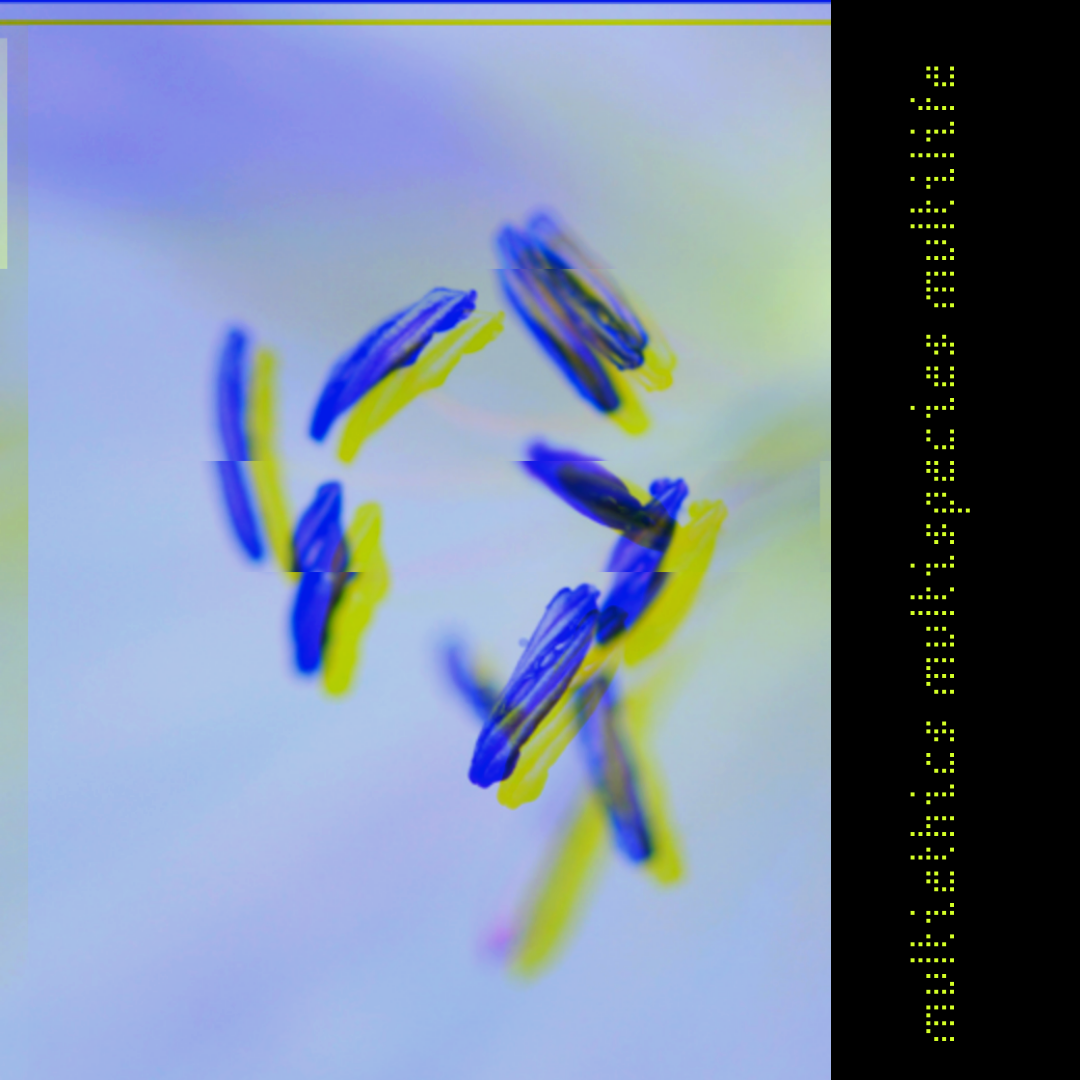
Stem
Artist Statement: Talking & Listening to Plants
How do you be kind to a plant? Plants, by their very being, are kind to the rest of us. I experience their generosity in every breath. In spring and summer, when I step outside, their scents color the air and make breathing not just automatic but a delight. This is one of the deepest pleasures of my life, and it is only one of the ways plants support me. I am trying to return the favor.
I am lucky to live both near a park where wild plants thrive, and in a house with a big yard, where it’s possible to welcome both cultivated and wild plants in. Lucky or unlucky, I also live in a region that, because of anthropogenic climate change, experiences more frequent, and more violent, hurricanes than in the past. When I wrote “Stem,” I was thinking of the cosmos that I’d planted that summer. I love cosmos—love how cheery and how hearty they are, love the ranging of their colors from deep purple to lavender to pink to white, and the orange and yellow varieties too, love the shapes of their petals and their leaves. Some cosmos species are native to what are now called the Western United States, very far from where I am on the East Coast, but on the same continent.
Hurricane Isaias had just come through. It was stressful to plan for the storm, worrisome to wonder through the night how bad things would be, a hassle to board up the biggest windows and then unboard them. This time we were fortunate—the storm knocked our power out for a couple of days, but we were fine. And in the garden, things were fine too—everyone tall knocked over or leaning, but, as I discovered then, the stems of the cosmos had not broken; they had flexed where they could, where their roots joined the soil, and this meant I had the chance to assist them. Even without me, though, their branching stems would have reached toward the sun from their new position.
Is it kindness to grow and care for a cultivated plant that would not otherwise be able to live in the wild? Is it kindness to cut flowers, if you do so with care and make room for new growth? It is self-interested even if it is kind—and this is another thing plants remind me about myself, that it is very hard to absent self-interest from my actions. So hard that it can be good to remember the inverse way of looking at things. As Robin Wall Kimmerer writes, “All flourishing is mutual.” I work to support the flourishing of the plants I am near. Both things are true: It is their right to grow well, and in conditions that they enjoy, no matter what humans may be up to. And as they thrive, I do, and my human and more-than-human kin.
Anna Lena Phillips Bell is the author of Might Could, winner of the Anthony Hecht Poetry Prize, Ornament, winner of the Vassar Miller Poetry Prize, and the chapbook Smaller Songs, from St Brigid Press. New work appears in Orion, Poetry London, Ploughshares, and Lit Hub, among others. The recipient of a North Carolina Arts Council Fellowship in literature and the Winter Anthology Award, Bell teaches at UNC Wilmington and has served since 2013 as the editor of Ecotone. She lives with her family near what’s now called the Cape Fear River.