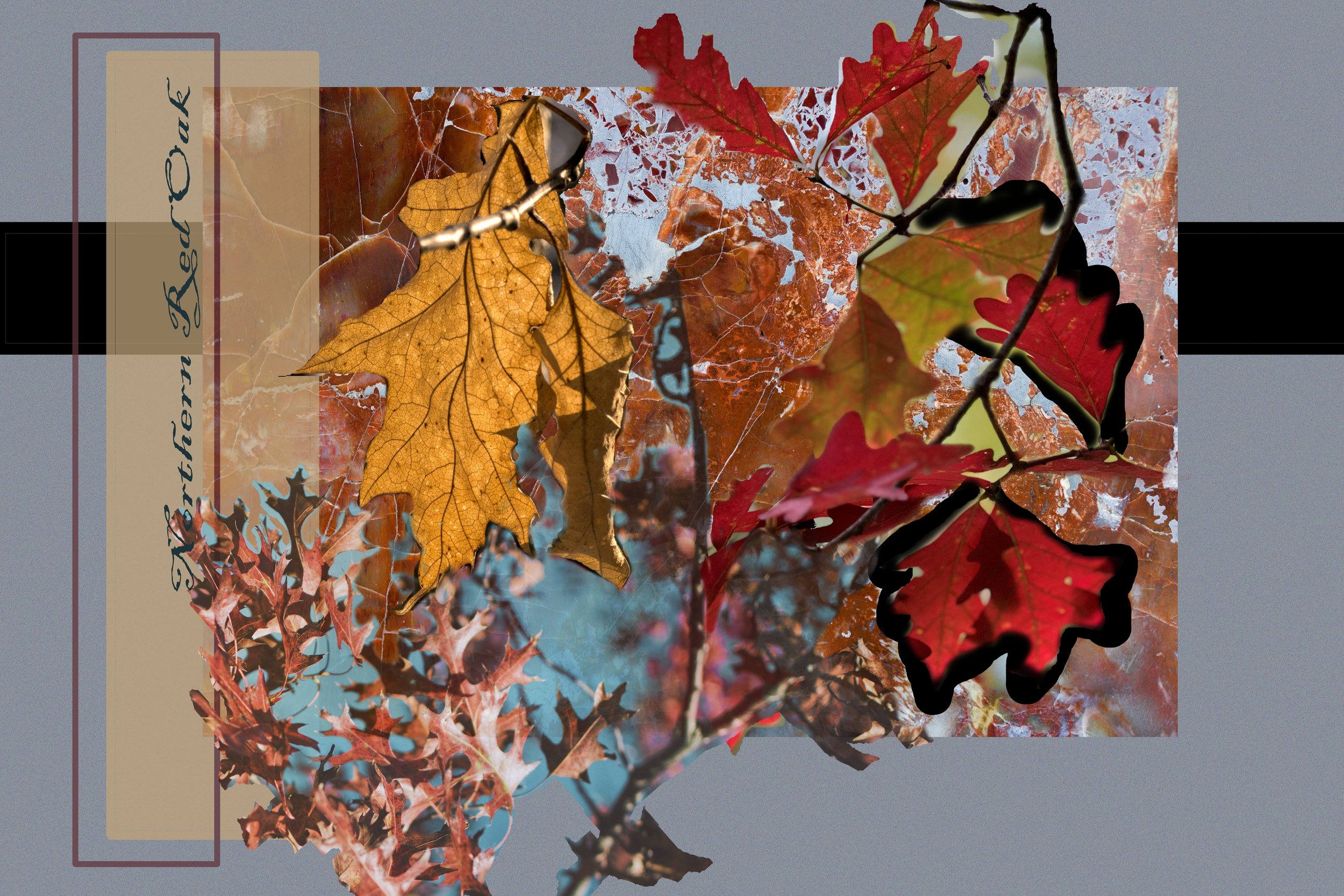
Autumn arrives and the white oaks up the hill
turn into hussies, tossing their vermillion leaves
like chorus girls doing handstands, their flaming
crowns bouffant, like upside down crinoline
petticoats. But the red oak clings to her green,
as if she does not want to leave the warm behind,
to stand, stripped naked, bare limbs rattling
like bones, smaller branches scraping the sky,
their fretwork intricate as torn black lace. I sit
at the foot of the tree, trying to feel what holds
on and what lets go, the moment last year when
my brother Peter stopped breathing still so alive
I flinch when it comes up, then open the book
of the body and look, his absence pressed deep
inside me, green leaf I will never forget. I meant
to say something more there, didn’t I? But life
drags me forward the way the winter sneaks
by stealth into the trees. The next time I visit
my tree she’s clad in leaves the color of honey,
her crown the vault of a cathedral lit amber
by setting sun. It’s the color of loss and preservation,
shining like the pieced glass lamp with the oak leaf design,
always lit in my grandmother’s front hall. It’s
the color of longing, though I know the oak is not
a woman, not a reflection of the stumbling human
me that visits, trying to look deeper each time, learning
her language of rustle, clatter, and hiss. Though she
mostly keeps her own counsel, consorting with wind.
The ancient Celts said their tree alphabet was a song
dictated by the universe. Their word for oak is the origin of door.
Alison Townsend has authored a memoir, The Green Hour: A Natural History of Home (shortlisted for the PEN Essay Award), and two books of poetry, Persephone in America and The Blue Dress. Read more.