Pascale Petit
Kapok
Trees of Song
Mahogany
Artist Statement: Talking & Listening to Plants
The Amazon rainforest has given me a momentous gift – a mother I can love. I call my forest-mother Mama Amazonica. She is alive and vast, lives in a book of poems I wrote, called Mama Amazonica. In the first and titular poem of that collection, my mother is a giant waterlily, Victoria amazonica. She is mentally ill and abused, as my human mother was, so the two merge – the rainforest biosphere is also a psychiatric ward, and my human mother’s psychiatric ward is the Amazon. Changing my mother into a flower transformed my troubled relationship with her. She turned from a cold abusive parent into the place I love most. She heated up, and I could write a whole book filled with compassion for her and for our abused Amazonia. I still have a troubled relationship with my dead mother, but I also have this book where I love her. But why did I choose to turn my mother into the rainforest?
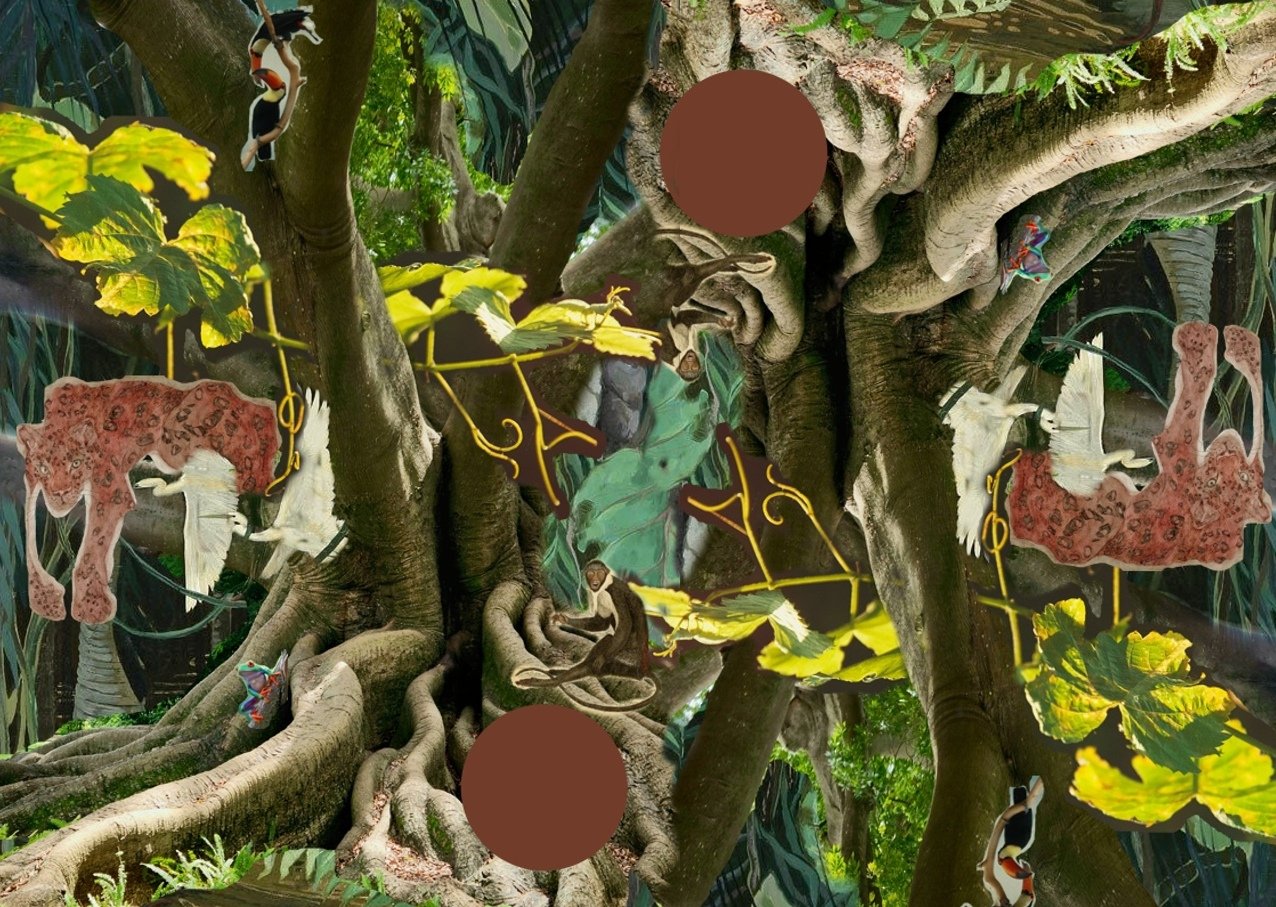
I have been obsessed with the Amazon for the last thirty years, since I first went there to see Angel Falls in Venezuela and to climb Mt Roraima. Then, ten years ago I went twice to the Peruvian Amazon, to the pristine lowland of Tambopata National Reserve in the Madre de Dios region. It was there I saw a great fallen kapok tree covered with orchids, described in my poem ‘Kapok’. Several of my poetry collections are based in Amazonia and the one I’m working on now explores the canopy, recording a vanishing world as roads are cut into virgin forest. I am terrified that Amazonia will vanish, once it reaches tipping point and there are not enough trees to maintain the biome with its power to store carbon.
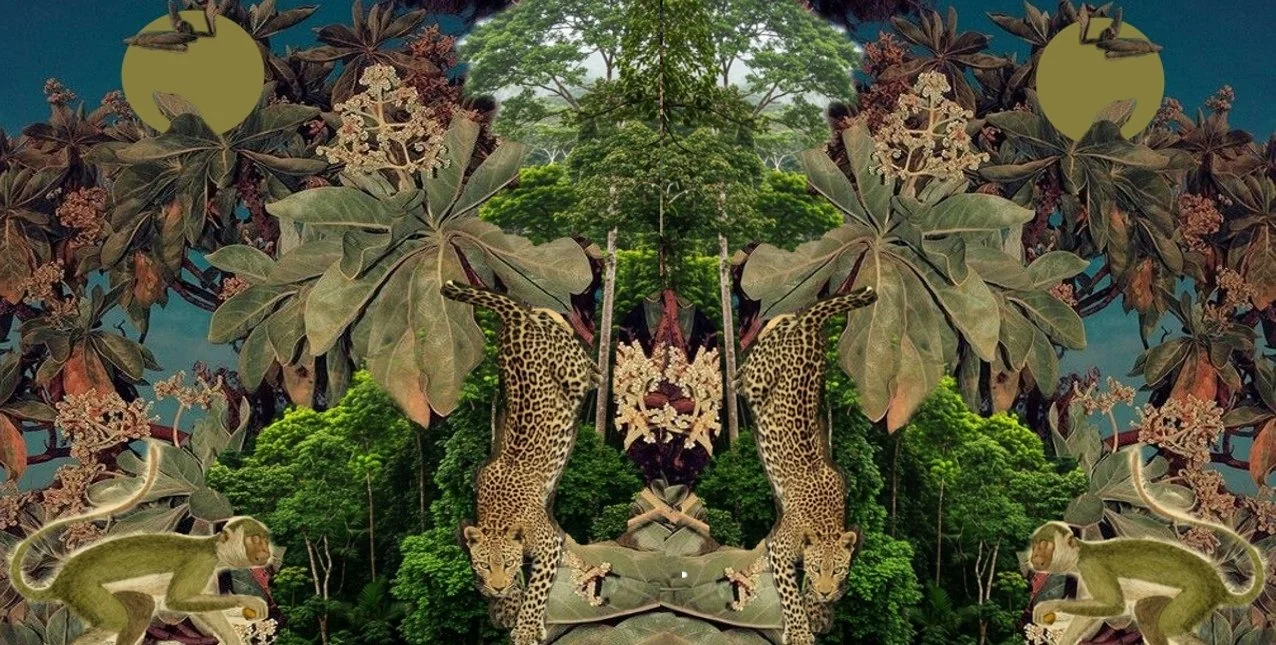
My fascination with luxurious jungle plants started when I was a child and lived with my grandmother in mid-Wales. Her garden was my first Amazon. I used to hide in the hedges inside the leaf world. I knew then that when I grew up I would either live in a hedge or become a hermit with a hut in the woods. I’m in my seventies now, and am surrounded by the high Cornish hedges of rural Cornwall, just under Bodmin Moor. I often dream of living in a treehouse, in the rainforest, high up in the canopy. There are several I could stay in if circumstances allowed. This longing is becoming my tenth collection. I am writing about a girl who lives in its canopy, whose mother is in a factory weaving a new rainforest from her daughter’s reports. I long to go back there and hope to one day. My obsession with trees led me to spend time in the tiger forests of Central India. ‘Trees of Song’ is influenced by Gond paintings and tribal beliefs about their trees who they revere as gods. In this poem I wanted to explore what a tree might feel about humans. What do they make of us? We must pass by in a blur, as tree-time is so much slower, compared to ours.
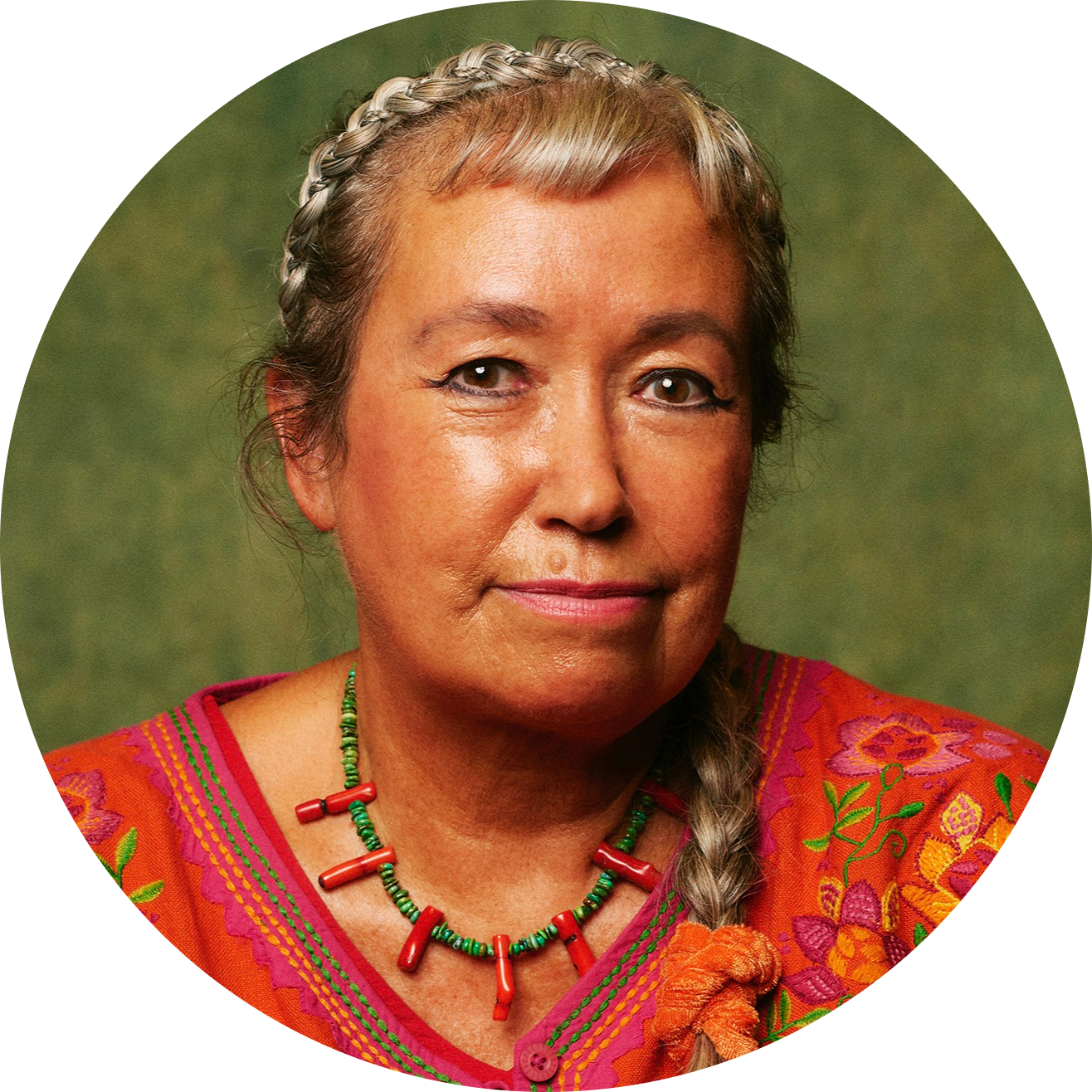
Photo credit, Derrick Kakembo
Pascale Petit was born in Paris and lives in Cornwall, England. She has published nine poetry collections, four of which were shortlisted for the T.S. Eliot Prize. Her ninth, Beast (Bloodaxe, 2025), was a Poetry Book Society Recommendation. Her eighth, Tiger Girl (Bloodaxe, 2020), was shortlisted for the Forward Prize for Best Collection, and for Wales Book of the Year. Her seventh, Mama Amazonica (Bloodaxe, 2017), won the RSL Ondaatje Prize and the inaugural Laurel Prize for eco-poetry and was the Poetry Book Society Choice. Her debut novel, My Hummingbird Father, was published by Salt in 2024.